A question that comes up constantly from people thinking about fitness work: “Which personal trainer certification will actually get me hired, and is the expensive one worth it?” The honest answer is that the brand matters less than one word on the certificate, and that the best choice depends on where you want to train people. Here is how the four best-known options compare.
The quick answer
- Choose a certification accredited by the National Commission for Certifying Agencies (NCCA). NASM-CPT, ACE-CPT, ACSM-CPT and NSCA-CPT all qualify.
- All four expect you to be at least 18, hold a high school diploma or equivalent, and have a current CPR/AED certification before you test.
- For a job on a commercial gym floor, any of the four is widely recognized.
- For clinical, older-adult or medical-adjacent settings, ACSM has the strongest reputation. For athletes and strength coaching, NSCA does.
- Price differences come mostly from study packages, not the exam itself. Buy only what you need.
Why NCCA accreditation is the filter that counts
Anyone can sell a “personal trainer certification.” There is no federal license for trainers, and almost no state requires one. Employers fill that gap by asking for a certification from a program that has been independently reviewed. The most common benchmark in the US fitness industry is accreditation by the NCCA, the accrediting arm of the Institute for Credentialing Excellence. Accredited programs have to show that their exam is valid, fair, properly secured and separated from their own training sales.
Two details catch people out. First, accreditation applies to a specific credential, not to a whole company; several organizations sell both accredited and non-accredited products. Second, a provider’s logo on a sales page is not proof. Look the exact credential name up in the accredited program directory on the Institute for Credentialing Excellence website before you pay.
The four big names, side by side
| Credential | Organization | Known for | Good fit if you want to |
|---|---|---|---|
| NASM-CPT | National Academy of Sports Medicine | Its corrective exercise-based training model and strong name recognition at commercial gyms | Work in a big-box or premium club and build a client base |
| ACE-CPT | American Council on Exercise | Behavior change and coaching approach, accessible study materials | Work with general-population clients and beginners |
| ACSM-CPT | American College of Sports Medicine | Research and exercise science roots, respected in clinical and medical fitness | Work in hospital wellness centers, senior fitness or alongside health care teams |
| NSCA-CPT | National Strength and Conditioning Association | Strength and conditioning science | Train athletes or move toward strength coaching later |
The NSCA also offers the CSCS (Certified Strength and Conditioning Specialist), which requires a bachelor’s degree and is the standard for college and pro strength coaching. That is a different credential from the NSCA-CPT and not an entry-level option.
The prerequisite people forget: CPR/AED
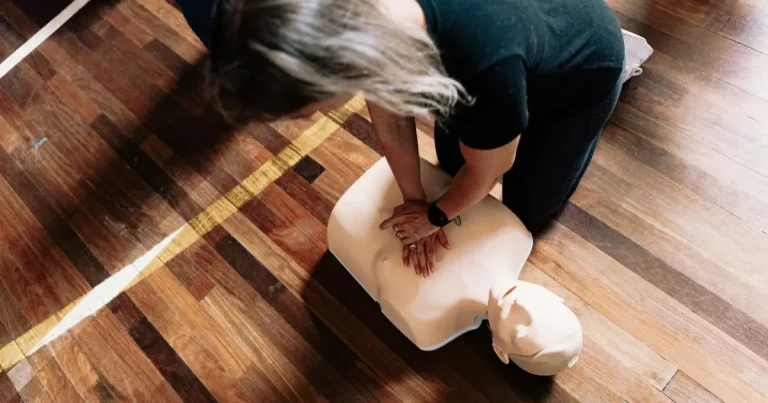
All four organizations require a current CPR and AED certification to sit for or hold the credential, and employers check it separately. Many require a course with a hands-on skills component rather than an online-only card. The Bureau of Labor Statistics notes that most trainers and instructors need CPR, first aid and AED certification, in its Occupational Outlook Handbook entry for fitness trainers. Book that class early; it is often a few hours on a weekend.
Which gyms require which
Requirements come from each employer, and they change, so read the posting. In general:
- Large club chains usually ask for a nationally recognized or accredited certification and current CPR/AED. Life Time personal trainer postings, for example, ask for a personal trainer certification and CPR/AED, and describe roles as suited to people with an accredited certification or a related degree. See our guide to Life Time jobs for how those roles work.
- Franchise gyms set requirements at the franchise level. Some postings list NCCA-accredited certifications as preferred rather than required.
- Hospital and medical fitness centers often prefer ACSM or a degree in exercise science.
- Boutique studios may care more about their own internal training program than about which CPT you hold.
Some clubs will hire you before you are certified and give you a deadline to finish, often paying you as a fitness floor staffer in the meantime. Ask about that in interviews.
Cost, time and the exam
Each organization sells study packages at several price points, from self-study books to bundles with videos, practice tests and coaching. The exam fee is a fraction of the total. Publicly listed package prices for the major CPTs commonly run from several hundred dollars to well over a thousand, and promotions are frequent. A self-study package plus the exam is enough for many people with some exercise background.
Most candidates study for a few months part-time. All four exams are proctored multiple-choice tests, either at a testing center or online with a remote proctor. All four also require continuing education to stay certified, on a two- or three-year cycle, so budget for that.
What the job market looks like
The BLS reports a median wage for fitness trainers and instructors of $47,160 a year as of May 2025 and projects 7 percent employment growth from 2025 to 2035. Pay for personal trainers often combines a base hourly rate with commission or a per-session rate, and your income tends to depend on how many regular clients you keep. The certification gets you in the door; retention keeps you employed.
Frequently asked questions
Can I get hired with a non-accredited certification?
Sometimes at smaller gyms, but it narrows your options. If you already hold one, check whether an accredited exam is available from the same or another provider without buying a full new package.
Do I need a degree?
Not for the four CPTs covered here. A degree in kinesiology or exercise science is often listed as preferred, and it is required for some higher credentials like the CSCS.
Is group fitness a different certification?
Yes. Group fitness instructors often hold separate group exercise certifications or format-specific training. Many trainers hold both.
Before you decide
Look at three real job postings for the kind of place you want to work and note exactly which certifications they name. Then check that credential in the NCCA-accredited directory, book a hands-on CPR/AED class and buy the smallest study package you can learn from. That sequence keeps you from spending money on a credential your target employers do not ask for.